The word "subsidence" has a way of stopping a property purchase dead in its tracks. Mention it to a first-time buyer and you'll often see the blood drain from their face. But the reality is more nuanced — and with the right professional advice, many properties with a history of subsidence are perfectly safe, insurable and mortgageable.
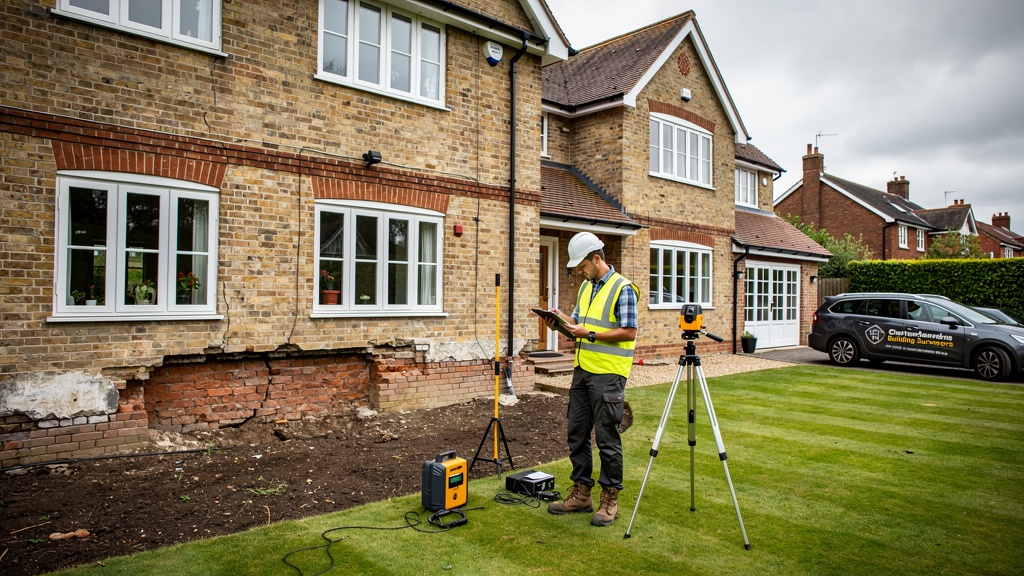
As a chartered surveyor in Coventry with over a decade of experience, I've investigated subsidence on dozens of properties across Warwickshire. Some turned out to be minor, historic cracking with no active movement. Others revealed serious structural issues that would have cost tens of thousands of pounds to repair. In every case, a thorough building survey was the tool that gave the buyer the information they needed.
What Is Subsidence?
Subsidence occurs when the ground beneath a building moves downward — causing the foundations to shift, which in turn causes the structure above to crack and distort. It's distinct from "settlement" (which describes the gradual compression of a building's own weight over time) and "heave" (which is the upward movement of the ground, typically associated with clay soils expanding in wet conditions).
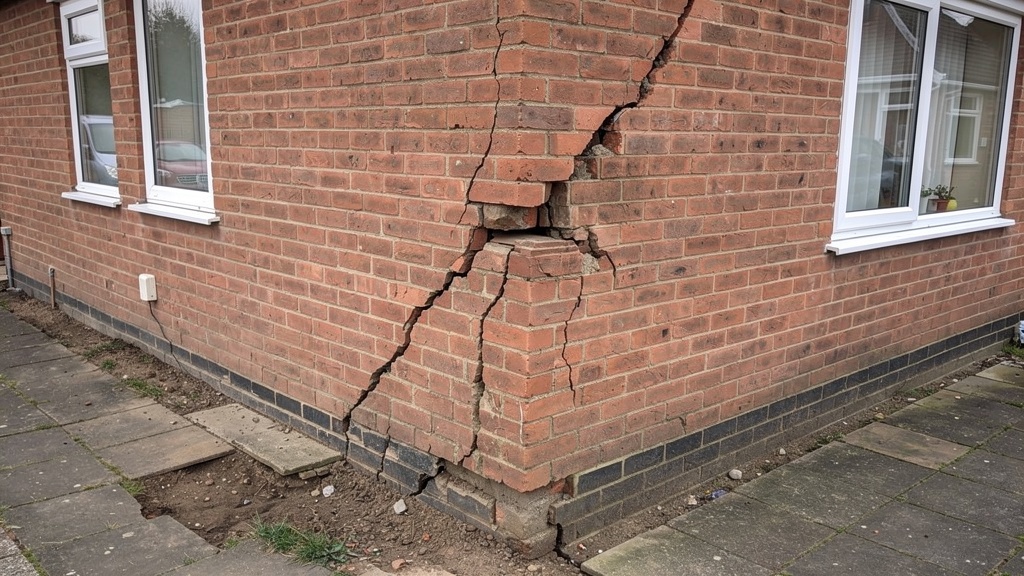
True subsidence is caused by the ground literally sinking, and it can affect one part of a building more than another — which is why you'll often see diagonal cracks emanating from corners of windows and doors, rather than straight vertical cracks in the middle of a wall.
What Causes Subsidence in Coventry?
Coventry and the wider Warwickshire region sit on a variety of soil types, but clay is particularly prevalent — especially in the south and east of the county. Clay soils are one of the main culprits in UK subsidence, because they shrink and swell significantly as they dry out and absorb moisture.
The main causes of subsidence include:
- Clay soil shrinkage: During hot, dry summers — increasingly common due to climate change — clay soils lose moisture and shrink. This was a major issue during the 2022 and 2023 summer droughts, and our team saw a significant increase in subsidence-related surveys following both summers.
- Tree roots: Large trees close to a property draw moisture from the clay soil, causing it to dry and shrink around the foundations. This is particularly common in Coventry's older residential areas, which tend to have mature street trees.
- Leaking drains: Water from a leaking underground drain can wash away the fine particles in sandy or gravelly soils, leaving voids under the foundations — a process called "erosion subsidence."
- Mining and industrial activity: Parts of Coventry and north Warwickshire have a history of coal mining. While most old mines are well-documented, their influence on ground stability can persist for many decades.
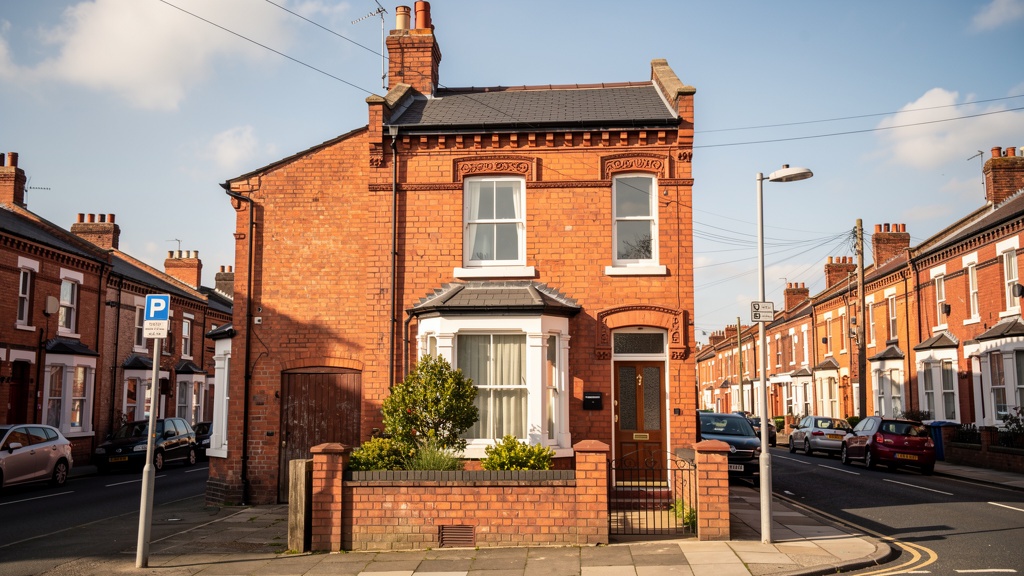
- Inadequate foundations: Very old properties — Victorian terraces in particular — were often built on shallow foundations by modern standards. Over time, these can move more readily than properties built to current standards.
How Do I Spot the Signs of Subsidence?
Not all cracks mean subsidence. In fact, the vast majority of cracks in houses are caused by normal thermal movement, settlement or poorly applied render — none of which are particularly serious. But there are some warning signs that should always prompt a closer look:
- Diagonal cracks, especially at the corners of windows and doors, are a classic subsidence indicator
- Cracks that are wider at the top than the bottom (or vice versa)
- Cracks wider than around 3mm — especially if they're getting wider
- Doors and windows that stick or don't close properly — because the frame has distorted
- Rippled or buckled wallpaper that isn't caused by damp
- Visible tilting or leaning of a section of wall
"We noticed a crack running from the corner of the front door frame up to the first floor window. It looked alarming. James's Level 3 survey found it was historic cracking from a small period of movement about 30 years ago — now completely stable. We knew exactly where we stood."
— Phil and Jo K., Rugby
How Does a Survey Assess Subsidence Risk?
A Level 3 building survey is the most appropriate tool for assessing subsidence risk. During the inspection, your surveyor will:
- Map all visible cracks, noting their location, direction, width and probable cause
- Assess whether cracking is active (ongoing) or historic (stabilised)
- Check for evidence of previous repair work that might mask underlying issues
- Consider the proximity of trees and drainage runs to the foundations
- Review available information about local ground conditions and mining history
- Carry out a risk assessment and advise on whether specialist structural investigation is warranted
If the survey identifies significant concerns, the next step is usually a specialist structural engineer's report or a ground investigation. Your surveyor will recommend this and can often suggest appropriate specialists.
Does a History of Subsidence Affect Mortgage and Insurance?
This is where many buyers get nervous — and with some justification. Properties with a known history of subsidence can be harder to insure and mortgage. However, the picture is more nuanced than many buyers realise:
- If the subsidence was historic, has been professionally monitored and is demonstrably stable, most mainstream lenders and insurers will consider the property on its merits
- If remedial works (such as underpinning) have been carried out, this can actually make the property more stable than an unaffected one — but you'll need documented evidence of the works
- Active, ongoing subsidence is a very different matter — and would typically require specialist attention before a lender would consider the property
Our survey reports are specifically written to address these questions clearly, so your solicitor and mortgage broker have the information they need to progress the transaction.
What Can You Do if the Survey Finds Subsidence?
Finding subsidence in a survey doesn't automatically mean you should walk away. Here's a practical approach:
- Read the report carefully — is the surveyor flagging active movement or historic, stable cracking?
- Speak to your surveyor — our free post-survey consultation call is specifically designed for moments like this
- Commission a specialist report if recommended — a structural engineer can provide a more detailed assessment
- Use the findings to negotiate — even if the subsidence is historic, it can justify a price reduction to reflect the additional risk and any required works
- Check the seller's insurance history — your solicitor should ask whether any insurance claims related to subsidence have been made on the property
Subsidence in Coventry: The Local Context
Parts of north Coventry and north Warwickshire lie over former coalfield areas. While most historical mining voids are well-documented with the Coal Authority, it's always worth checking. The Coal Authority Risk Assessment (available from their online system) will tell you whether a property is in a zone of coal mining risk. If it is, your solicitor should carry out a mining search as part of the conveyancing process — and we'll flag this in our survey report.
Summary: Don't Let Subsidence Panic You — Get Expert Guidance
The key message here is simple: if you see cracks in a property you're buying, don't panic — but don't ignore them either. Get a proper survey. Our experienced surveyors in Coventry will give you a clear, honest assessment of what you're looking at and what it means for your purchase.
Related reading: Level 2 vs Level 3 survey guide | Buying a Victorian property in Coventry | Survey costs in Coventry 2025